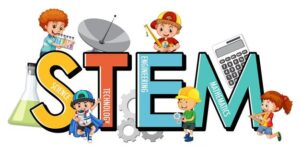
In Singapore, education is extremely important. Few of us will ever forget the many hours we spent on study, exams, and the infamous Ten-Year-Series (TYS). However, as technology advances, our educational methods must adapt as well, and Singapore has implemented a number of reforms that signal the incorporation of STEM (Science, Technology, Engineering, and Math) in our educational landscape.
Interdisciplinarity
STEM education has changed dramatically since the National University of Singapore (NUS) established the College of Humanities and Sciences. Because it unites the Faculty of Arts & Social Sciences and the Faculty of Science, the college touts its unrivaled freedom in pursuing breadth and depth from more than 1,000 modules per academic year.
Gone are the days when you could concentrate solely on one core subject – say, engineering or accounting – and find a solid job. Instead, students will be required to synthesize fresh insights while recognizing new opportunities by combining knowledge from various domains of expertise, such as coding and business.
Many people may be surprised by this, especially given the relatively early streaming of Arts and Science subjects in Junior College. This new shift, on the other hand, could be just what the economy needs to face the problems of the twenty-first century. Given the importance of innovation and technology-driven transformation in today’s economy, STEM knowledge (and STEM education) is essential for achieving long-term economic success.
Digitization
The COVID-19 pandemic has hastened the evolution of the global digital ecosystem, bringing increased demand for digital platforms, software, hardware, and services to the fore. We can now buy online, order our favorite foods online (and have them delivered to our homes), and even take virtual excursions around the world. In comparison to the actual world, this shift in lifestyle means that many more opportunities will emerge in the virtual realm.
As a result, students will need to develop abilities in order to take advantage of these changes. Junior College students can now choose computing as an A-level subject, thanks to quick changes in the educational system in response to the technology boom. Furthermore, as part of the government’s ambition to establish a pipeline of tech talent for the digital economy, all upper primary students have been taking coding classes since 2020.
Lifelong learning
The economy is rapidly changing. Traditional 21st-century economic engines like oil and gas, as well as shipping, can no longer be the only pillars of our economy. To make this transformation possible, the general public must adopt a new mindset: one that values lifelong learning.
As technology’s life cycle shortens, the knowledge we gain in school will inevitably become obsolete. As a result, we must become lifelong learners who are continually interested in new technology and willing to adopt it in order to keep up with the rest of the world.
Learn by doing
STEM education is delivered through ‘active learning,’ which requires students to recognize issues and develop potential solutions. Rather than reading about a concept in a textbook, students learn it by doing it. It’s a big cry from Singapore’s textbook-centric, exam-evaluated education paradigm for older kids accustomed to being told what they needed to know. Finally, unlike some of our neighbors, Singapore remains a country with one of the world’s smallest natural resource reserves. As a result, education is our primary competitive advantage, and the system must provide our citizens with the information and attitudes nice